Speak One VoiceInternationala faith initiative for women

Impact

Our first three years, 2018–2020

Faith leaders trained, women and young people reached, and congregations across four countries: the work between 2018 and 2020.

Stories

What this looked like for the people in it

Four accounts from the work between 2018 and 2020.

In her own words

This program that was started has really helped us. In my community, where I live, there is no fighting anymore. When they fight, and I am not afraid to confront them.

As I walk around I hear the neighbors asking, do you know who this is, do you know what she does? This woman is in GBV, she is the one who will report you to the police. I have had men show up on my doorstep in the morning pleading with me and telling me that they will never beat their wives again.

There is a man who married a wife all the way from Mwinilunga and he beat her up all the time. Two weeks have now passed and he has not beat her and each time he sees me he says Mum I will never do that again. Mum have you forgiven me? And I tell him it’s not my place to forgive you. It is God who will forgive you. All I can tell you is that the day you beat your wife, it is not her who will report you to the police, it is me who will report you.

So I wake up every morning and go about my chores wearing my SOV T-shirt and walk around so they can see that I am watching and alert… Yes, I am working…
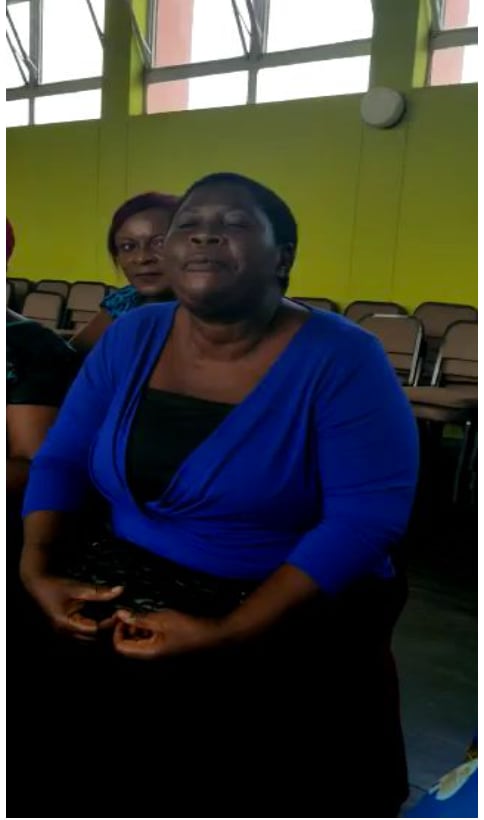
A Speak One Voice participant
A woman speaks in a hall, hands open in front of her, rows of empty chairs behind.
  • Malawi, 2020

    Four dioceses carried the work when the gatherings stopped

    Women’s guilds, youth and men’s groups across four Anglican dioceses

    Fifty facilitators had been trained in Lusaka in March 2020, leaving with work plans drawn up by country and diocese. Within weeks, Covid-19 had closed the gatherings those plans depended on.

    Malawi went ahead anyway. Across all four of its Anglican dioceses, facilitators took every opportunity of assembled believers, running sessions for guilds, youth and men wherever a group was already meeting, using their own resources.

    Anglican dioceses
    4
    Facilitators trained, March 2020
    50
  • Zambia, 2020

    When the rooms closed, the toolkit was rebuilt for radio

    Radio listeners across the Copperbelt, and television audiences nationally

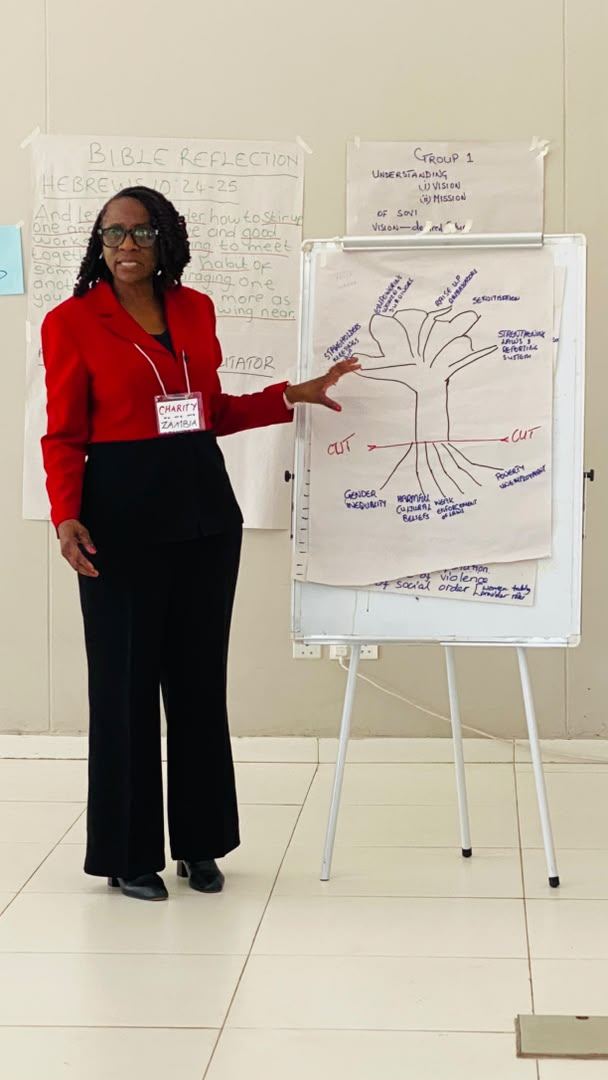
    Community Learning is built for a room: a facilitator, a group, a flip chart, four steps worked through together. The pandemic removed the room.

    Thirteen sessions of community conversation went out on Radio Chengelo instead, developed along the same themes facilitators used in person. Reported cases of violence rose during lockdown, and the broadcasts reached households at the point when the people inside them could not leave.

    Community conversations broadcast
    13
  • Ndola and Chingola, 2020

    Fifteen young people trained to have the conversation with each other

    Young people in Zambian congregations

    Fifteen young people were trained as peer-to-peer facilitators, and went on to run Community Learning with other young people at Faith Wins in Ndola and St John’s in Buchi.

    During the 16 Days of Activism that year, a youth drama was performed at five congregations across Ndola and Chingola. Young people were also asked what the toolkit’s new youth and parenting modules should contain, rather than handed them.

    Youth peer facilitators
    15
    Congregations reached
    5

Who the work reached

The people behind the figures

Each figure counts the group it sits under. The groups overlap, so they are shown separately rather than added together.

  • 2018–2020Zambia · Malawi · Zimbabwe · Botswana

    Faith leaders trained as facilitators

    Three groups were trained to lead Community Learning in their own churches and communities.

    Trained with Episcopal Relief & Development

    Groups trained, 2018–2020
    3
    At the Regional Facilitators Training, March 2020
    50
  • 2019–2020Zambia · Malawi

    Women in church guilds

    Facilitators took Community Learning to the women’s groupings already meeting in their churches.

    Anglican Mothers’ Union · St Veronica guild · UCZ Mwaiseni

    Anglican dioceses reached in Malawi
    4
  • 2020Zambia

    Young people

    Youth were trained to run Community Learning with their own peers, and were asked what the toolkit’s new youth and parenting modules should contain.

    Faith Wins, Ndola · St John’s, Buchi

    Youth peer-to-peer facilitators trained
    15
    Congregations reached by the youth drama
    5
  • 2018–2019Zambia

    Clergy and bishops

    Clergy and bishops were engaged through retreats to raise awareness, and out of the need to make the church a safe space.

    Anglican Church, Northern Diocese

    Clergy and bishops retreats
    2
  • 2020Zambia

    Whole congregations

    A family week, a vigil for family members who had been victims of violence, and “Equality Sunday” brought the work to congregations rather than to a group within them.

    St Michael’s Anglican Cathedral, Ndola

    Congregations observing 16 Days of Activism
    5
  • 2020Zambia

    Radio listeners and television audiences

    When Covid-19 stopped people gathering, the toolkit’s themes were rebuilt for broadcast so the conversations could continue.

    Radio Chengelo · National television

    Community conversations broadcast
    13
  • December 2019Zambia · Malawi · Zimbabwe · Botswana · Burundi

    The regional gathering

    Participants met under the theme “Promoting Women, Families and Churches as Safe Space in the Mitigation of VAWC”, and elected coordinators for their own countries.

    Participants, December 2019
    68

Where

Countries reached

Facilitator training and Community Learning were delivered in four countries.

  • Zambia
  • Malawi
  • Zimbabwe
  • Botswana

Facilitators were also trained in Burundi in 2018.

Photographs

What this looked like

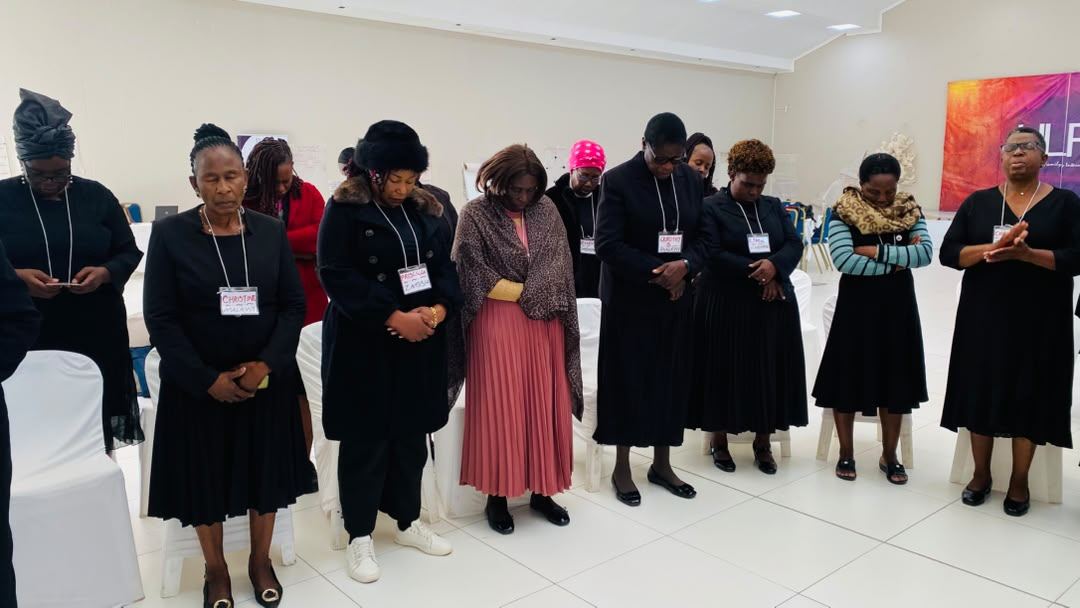
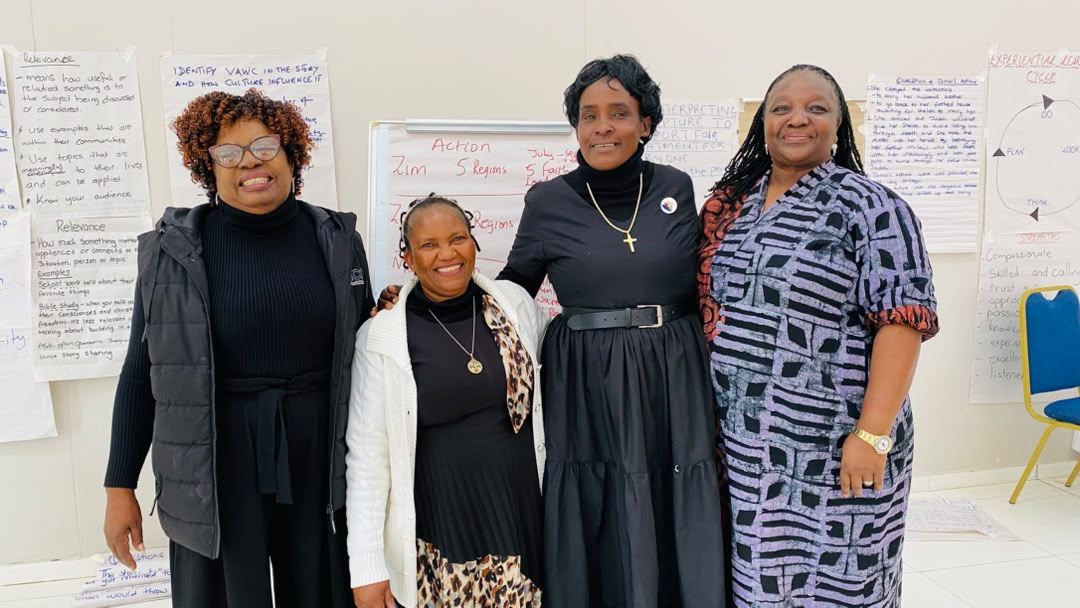
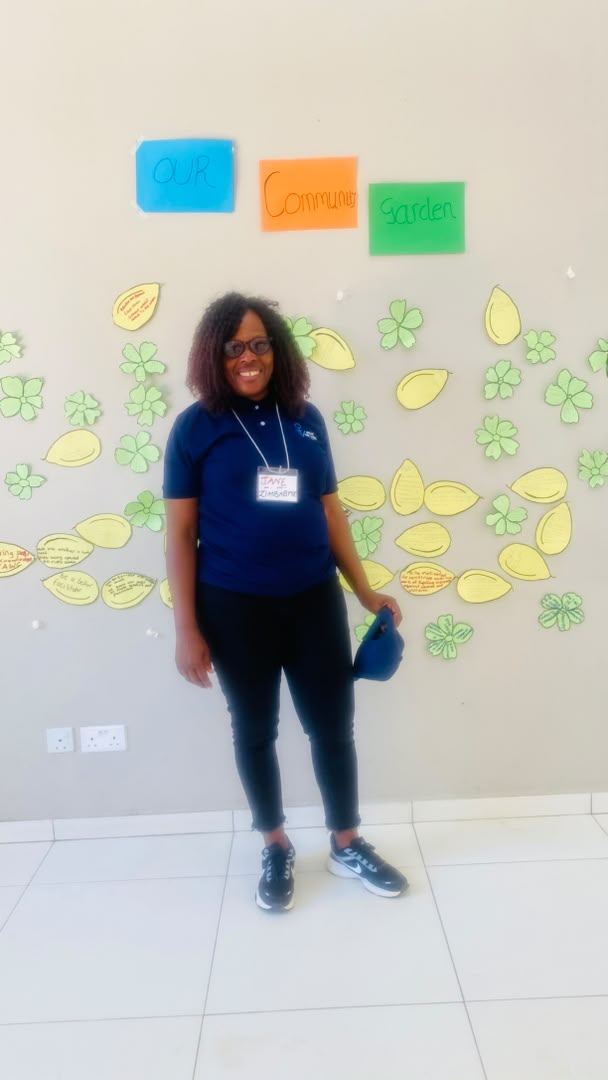
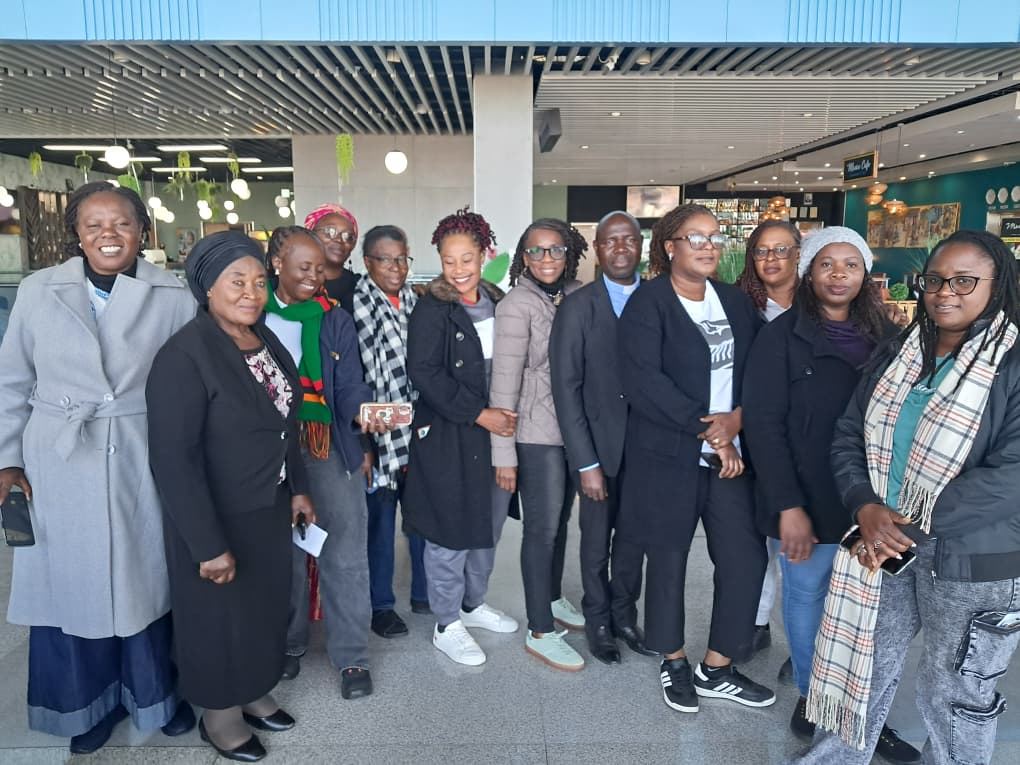
Faith leaders working through the causes of violence against women and children, and the plans they made together.

Be part of what comes next

This work grows where women and faith leaders step forward in their own churches and communities.

Get Involved